 Post and fittingSealed
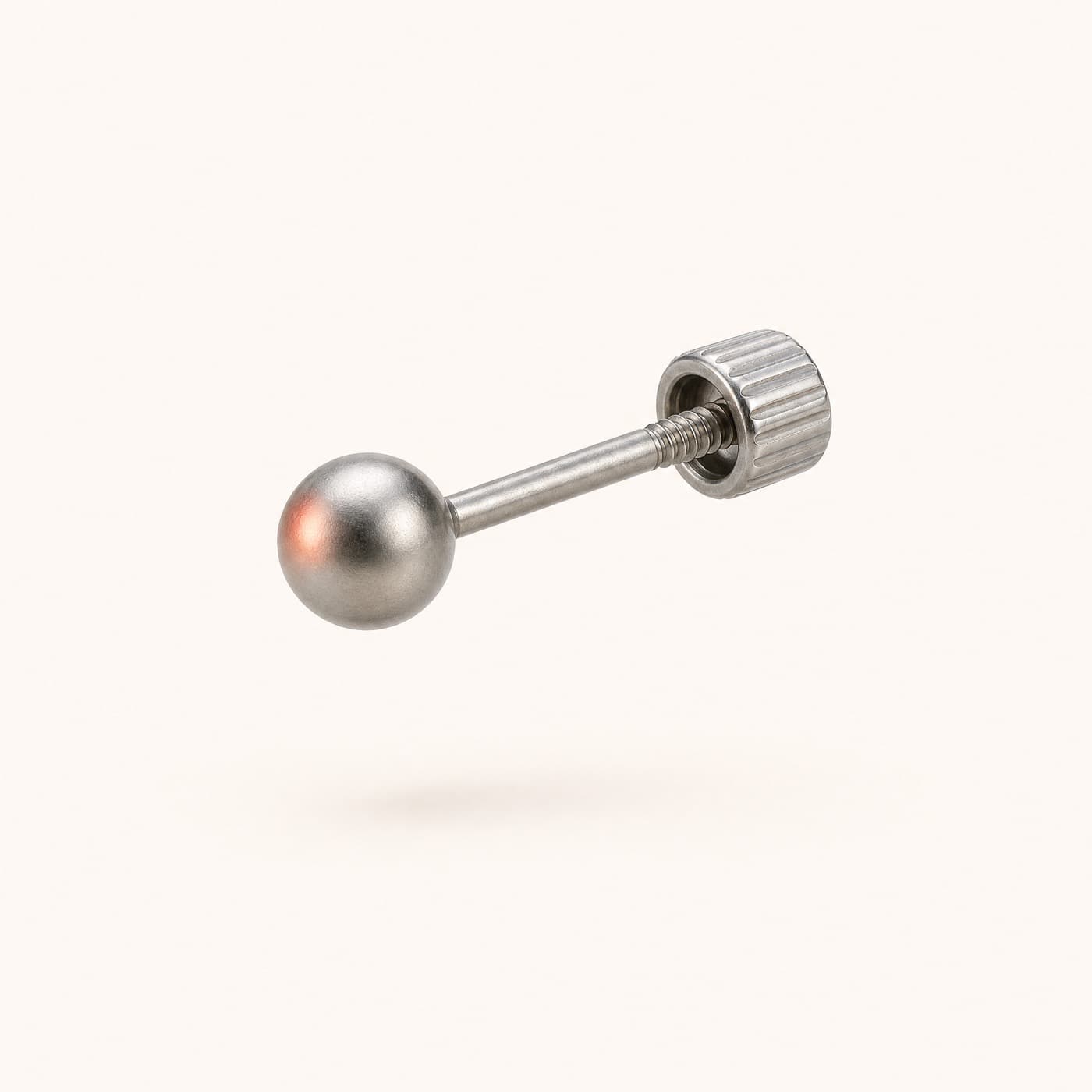
Titanium Ball Stud 3 mm
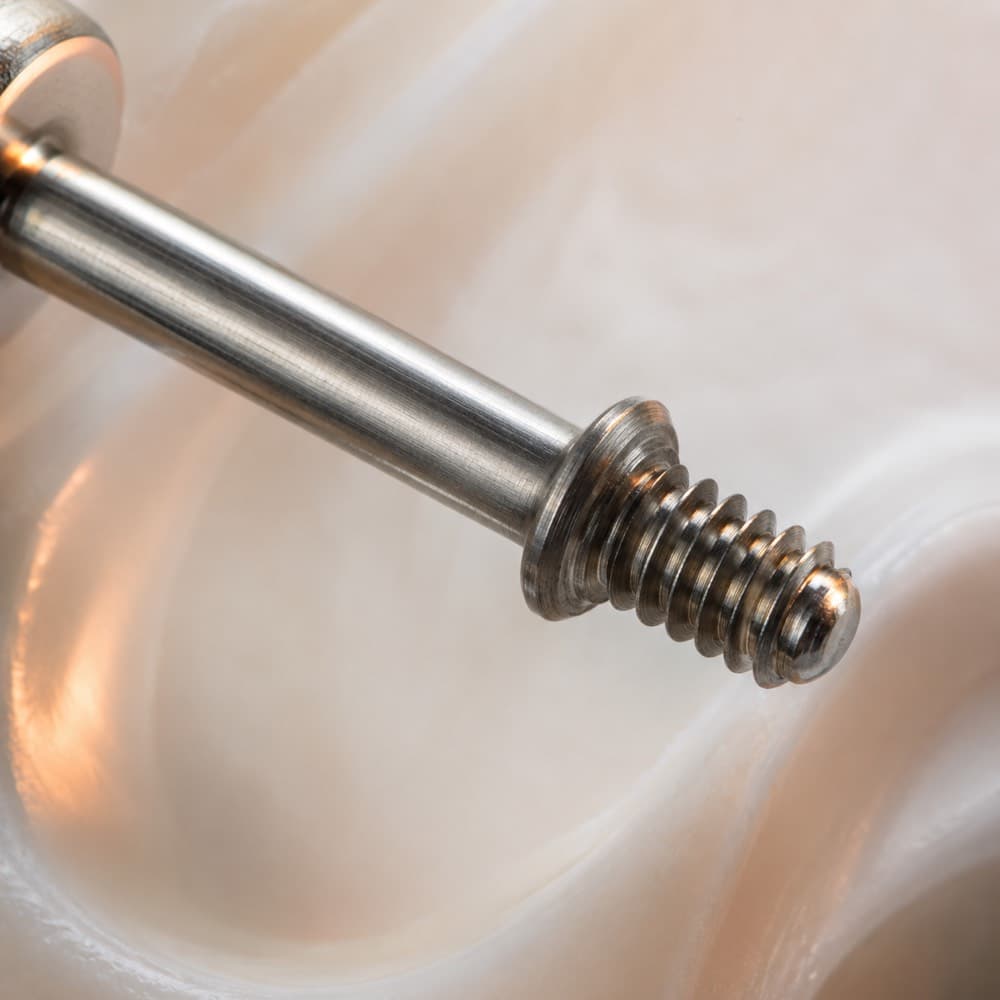
A 0.8 mm ASTM F-136 titanium post with a screw-back, weighing 0.4 g per piece.
£45.00inc. VAT
- Post
- 0.8 mm
- Metal
- Titanium
- Each
- 0.4 g
- Healing
- Yes
Earrings, specified
Most earring listings tell you what the front looks like. We publish the part that goes through your ear: what the post is made of, how thick it is, how long it is, what holds it on, and what one piece weighs. On every single item.
£12.00–£225.00, VAT included. Free UK delivery over £60.
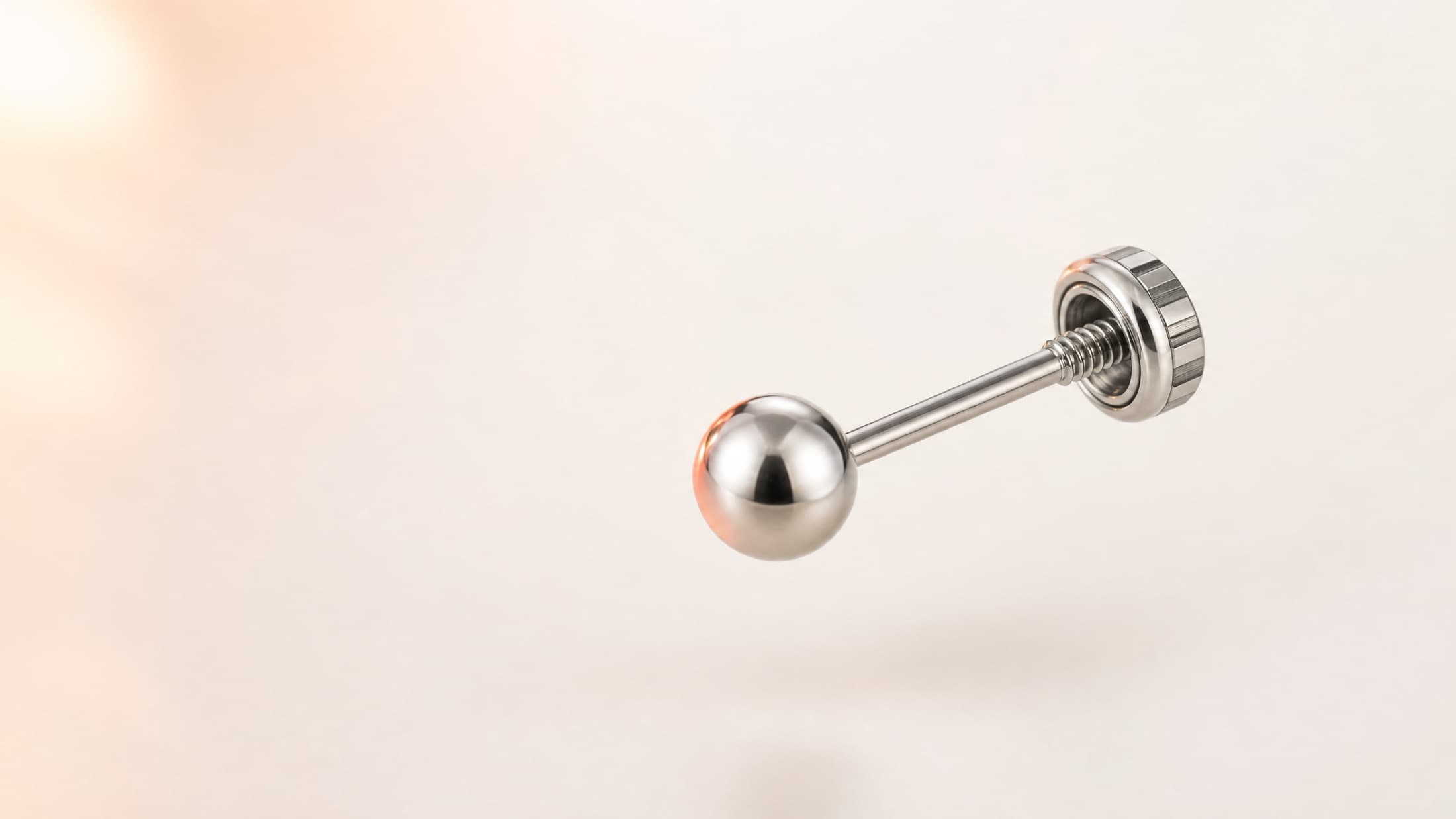
0.8 mm · Titanium · 0.4 g
What we publish
A piercing heals around a specific diameter, sits in a specific thickness of tissue, and carries a specific weight all day. Those are measurable facts, so we measure them and print them.
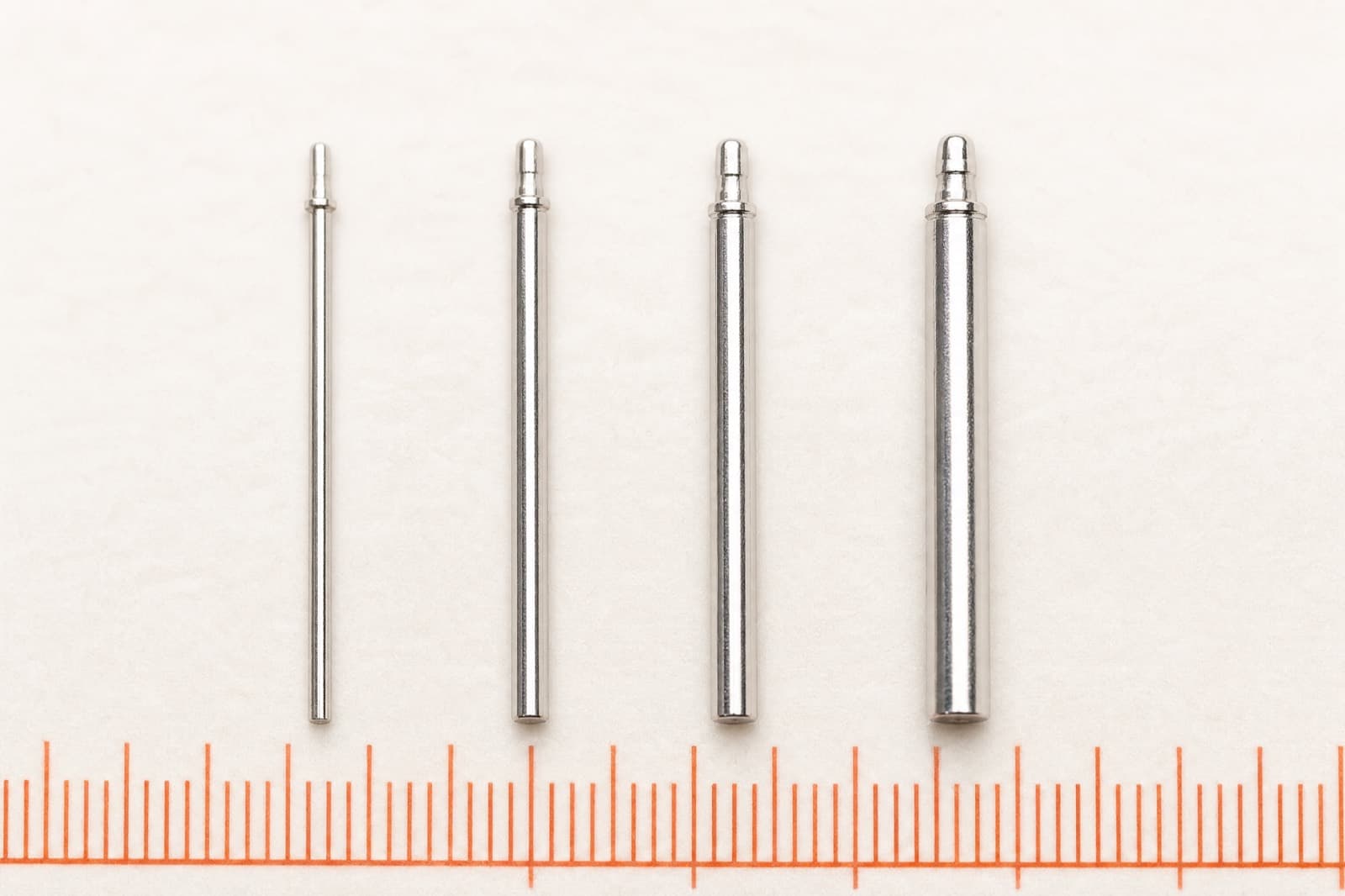
Post diameter
0.8, 0.9, 1.0 and 1.2 mm are all “a thin post” in a product listing. In an ear they are different. Going up a gauge hurts; it can tear.
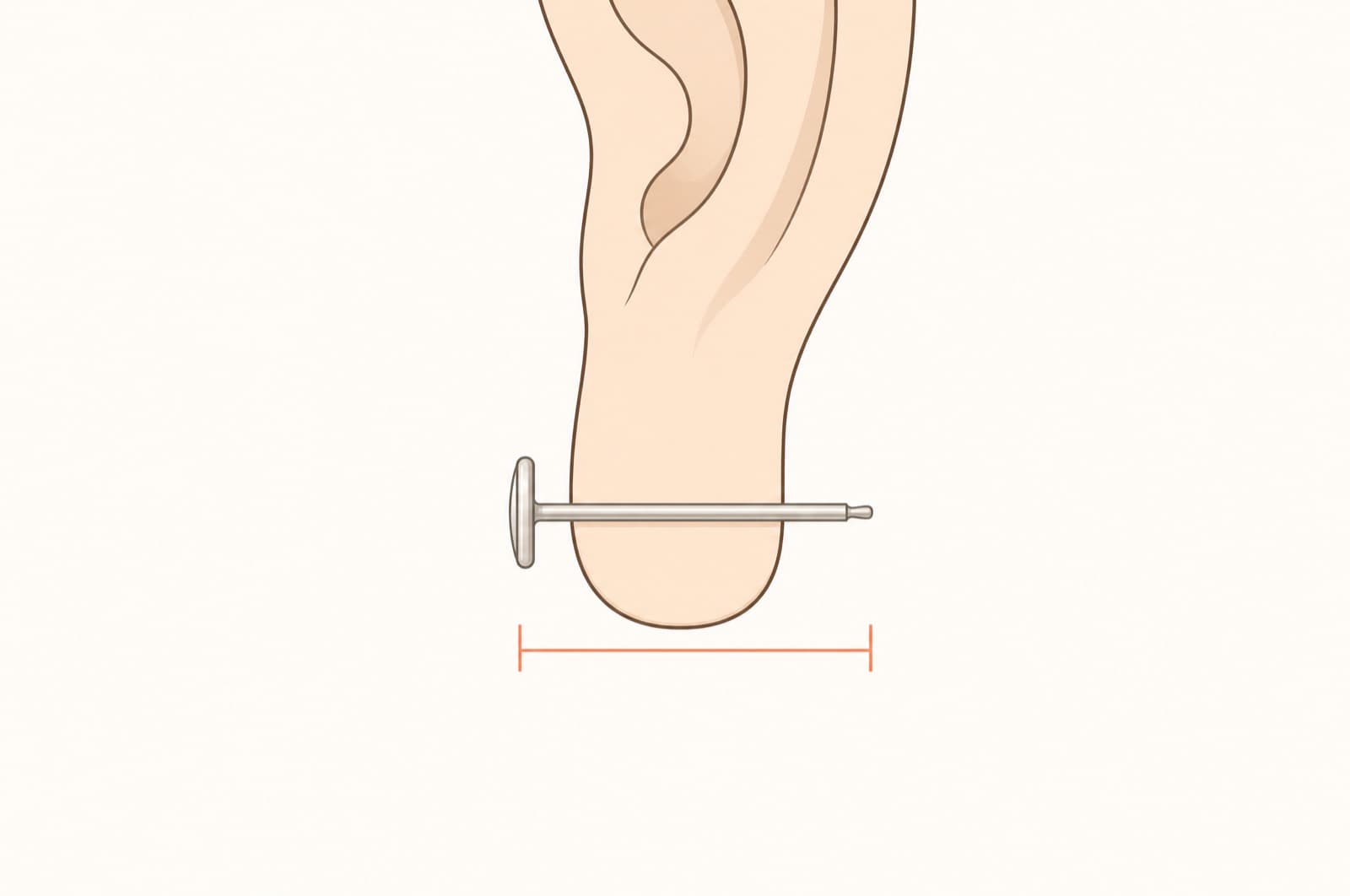
Post length
Too short and the clutch presses into the back of the lobe. Too long and it snags on collars and hair.
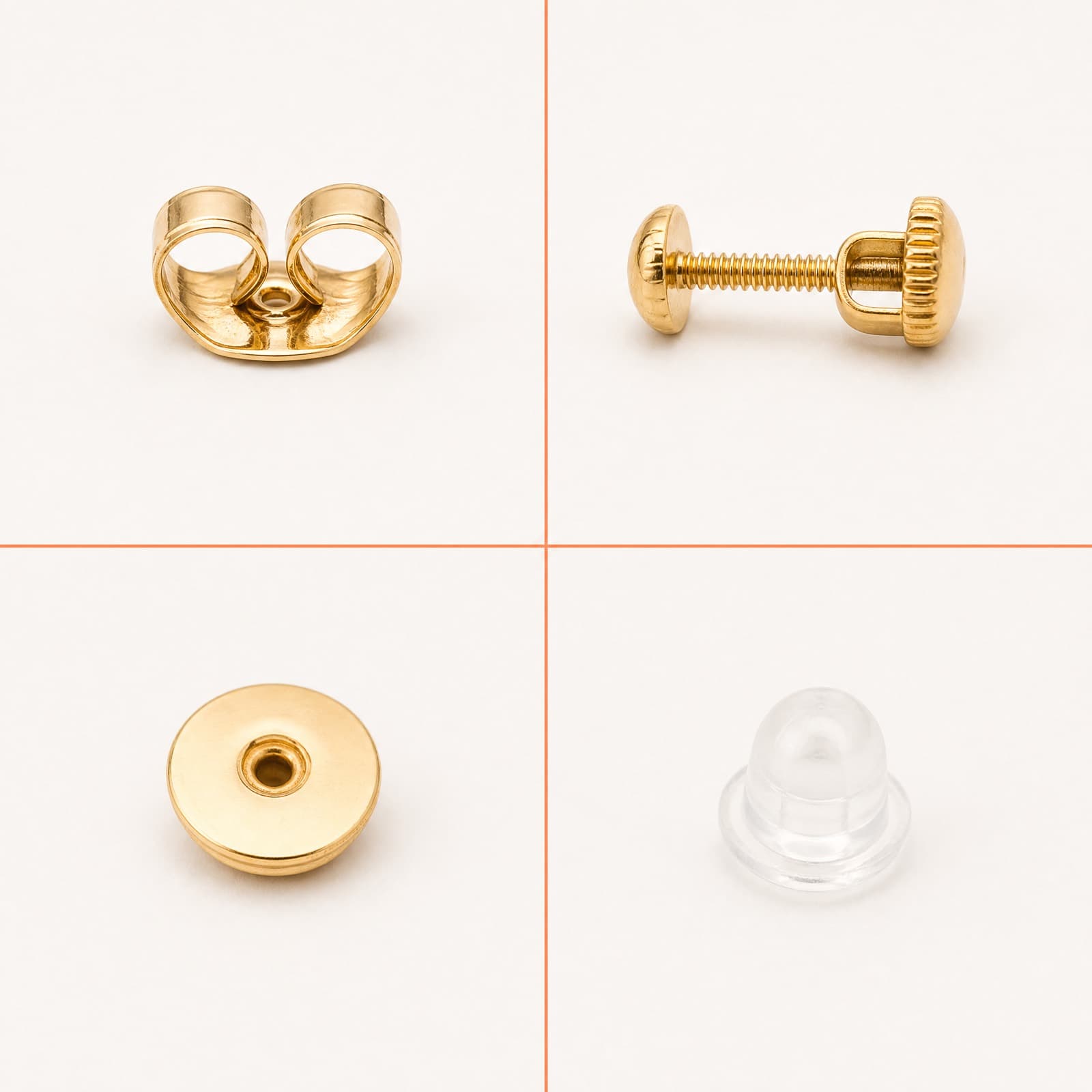
Back type
Butterfly, screw, flat push-fit or silicone. We say which, and how securely each one actually holds.
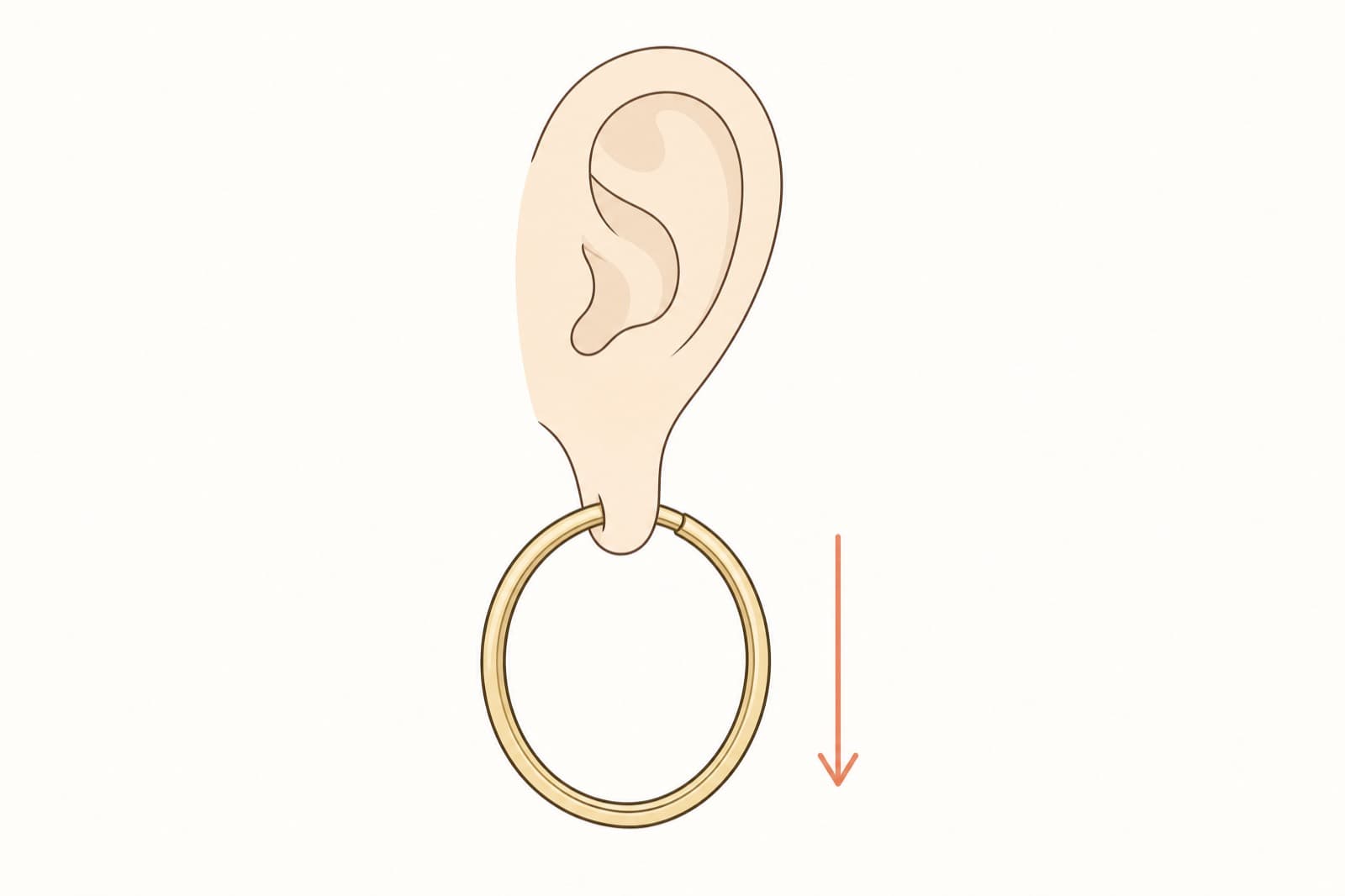
Weight, per single piece
Weighed one at a time, because one lobe carries one earring. Anything over 4 g gets a note about how long to wear it.
Ear map
Lobe tissue is soft and takes a standard post. Cartilage is firm, thinner front to back, and usually takes a shorter flat-back. Pick a position and see only what is sized for it.
Diagram of a right ear. The number on each marker is how many pieces we make for that position.
Different parts of the ear are different tissue and different thicknesses, so they take different posts. Select a position on the diagram, or use the list below.
We do not give medical advice. Questions about piercing, healing or aftercare belong with a professional piercer or a healthcare professional. Everything on this page describes materials and construction only.
The catalogue
Hover or focus any piece to see the macro of its post and fitting.
Post and fittingSealedA 0.8 mm ASTM F-136 titanium post with a screw-back, weighing 0.4 g per piece.
£45.00inc. VAT
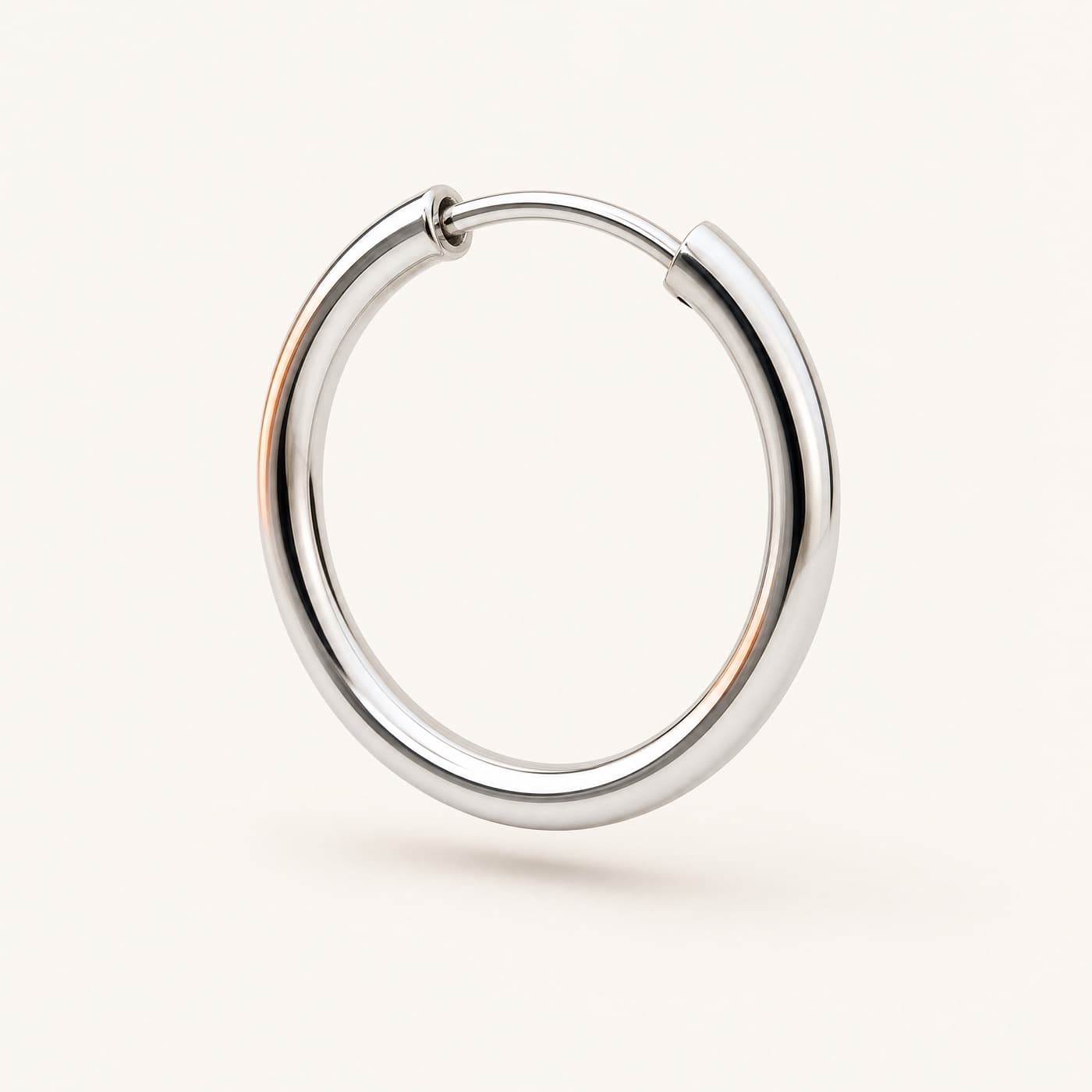
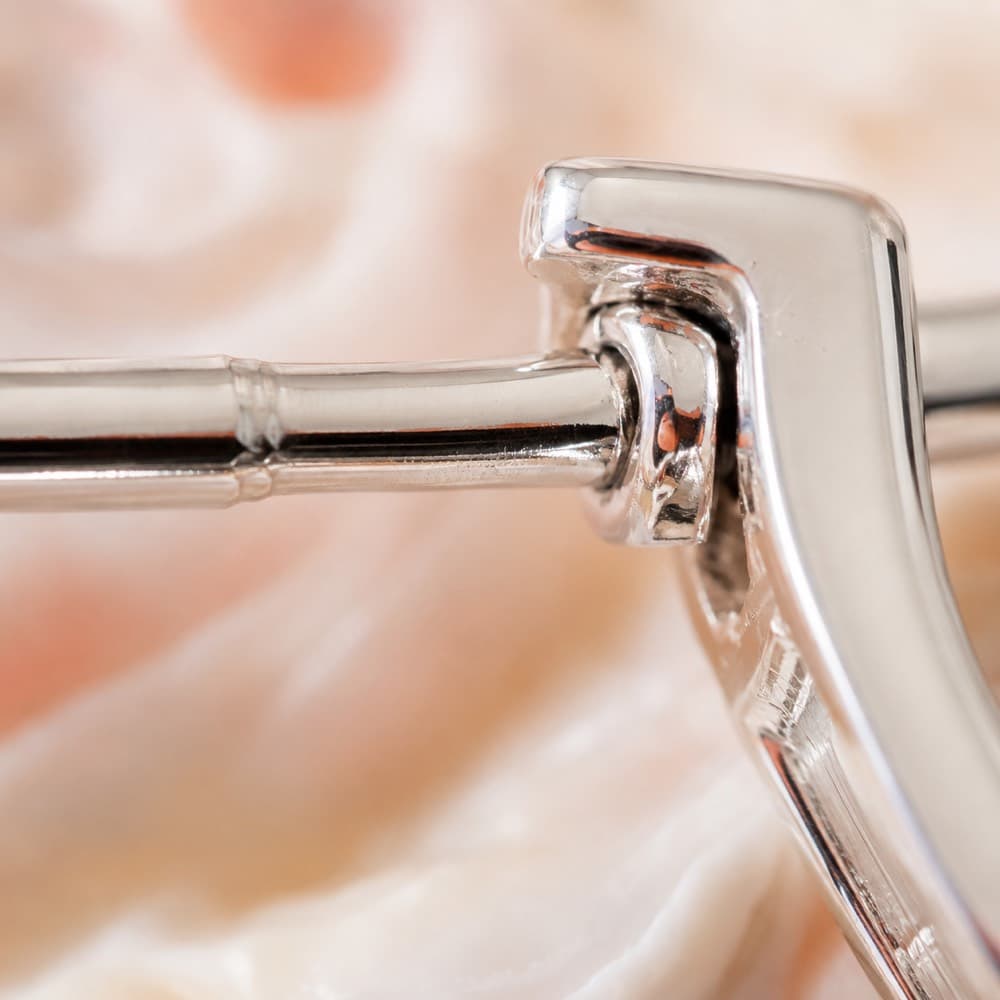 Post and fittingSealed
A 15 mm hoop on the same 1.0 mm wire, 1.4 g per piece.
£49.00inc. VAT
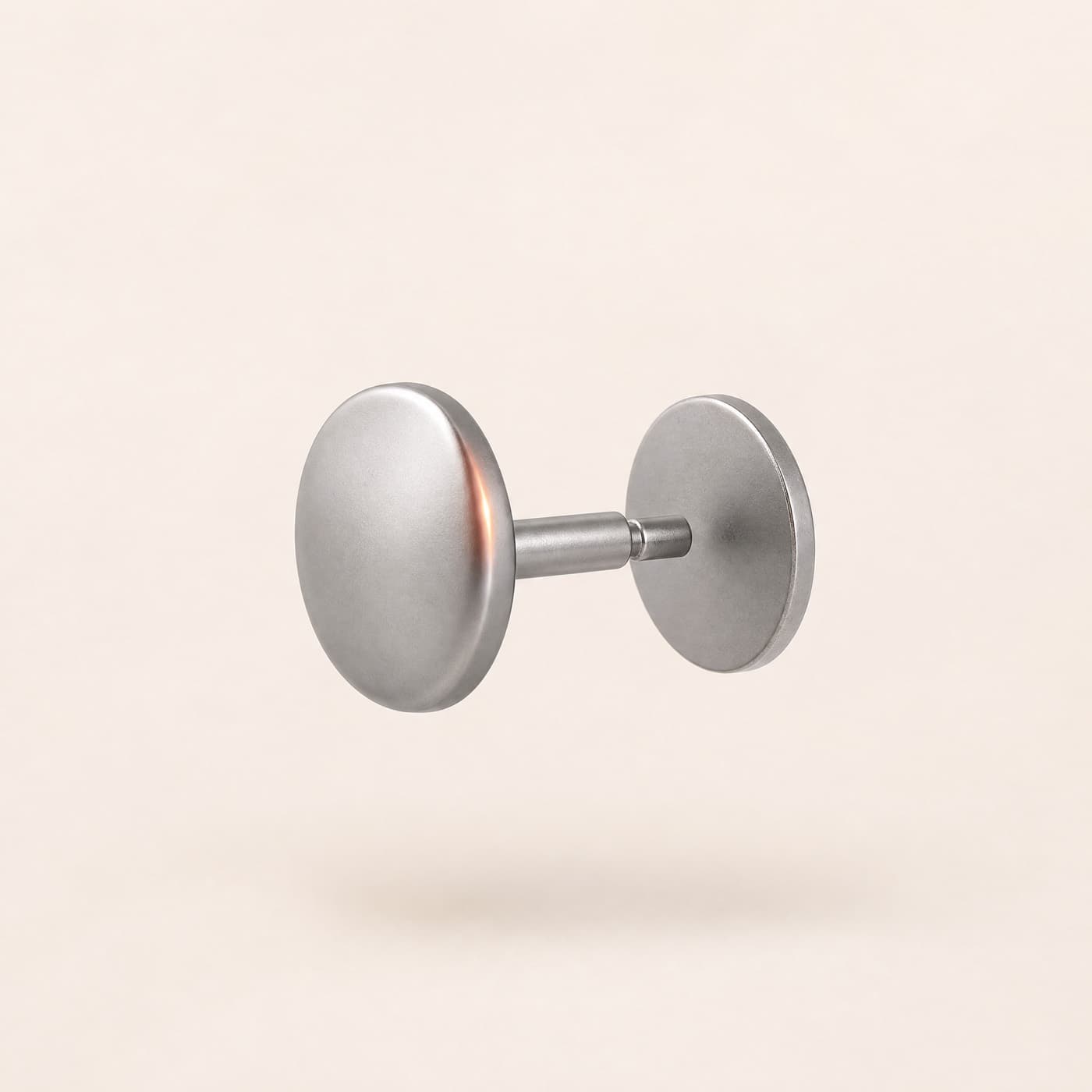
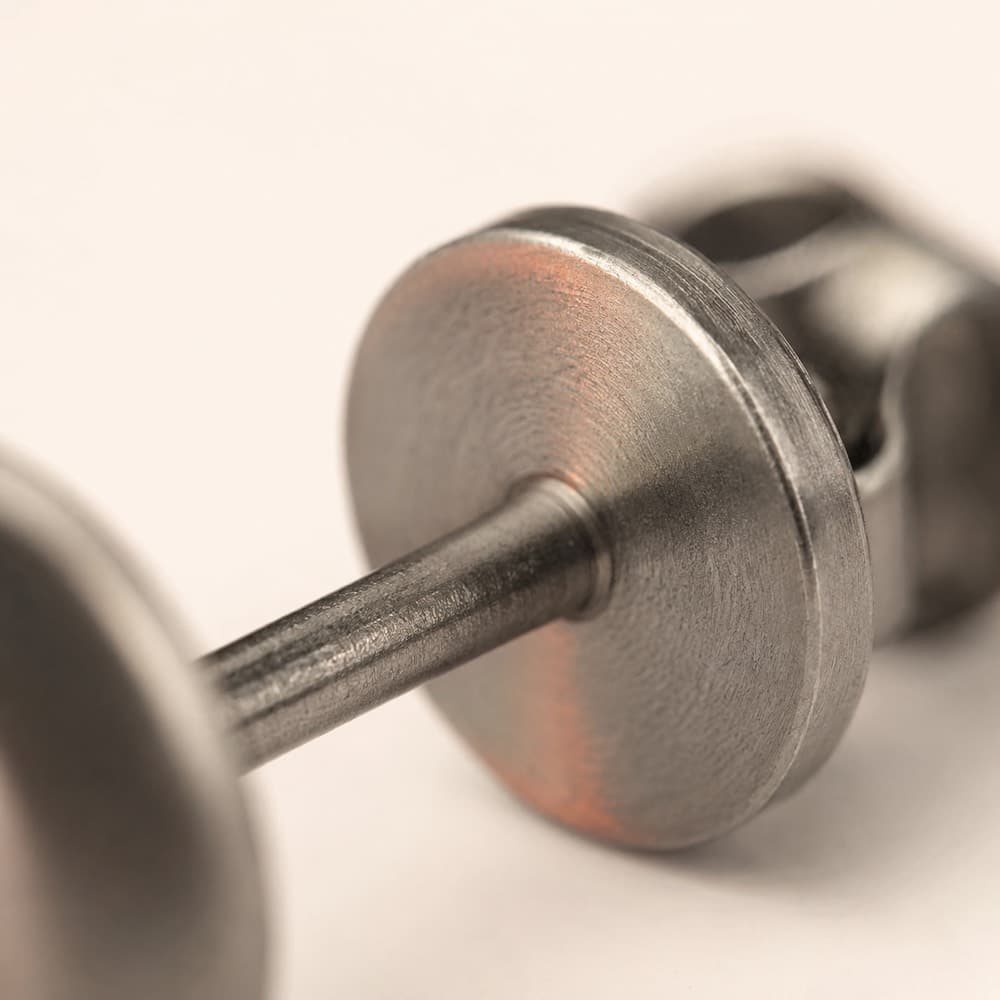 Post and fittingSealed
Threadless push-fit construction with a flat back, 0.8 mm titanium post, 0.4 g per piece.
£75.00inc. VAT
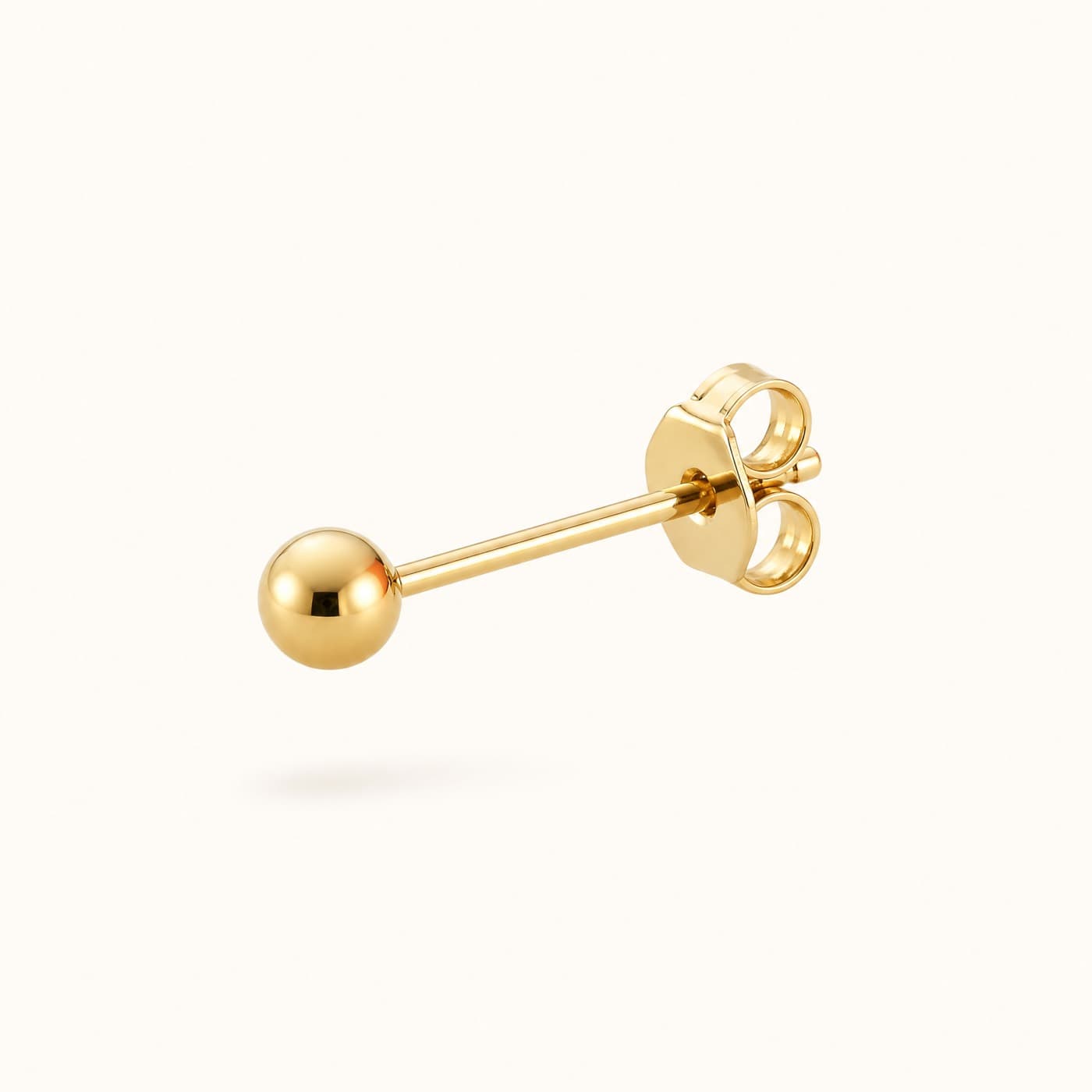
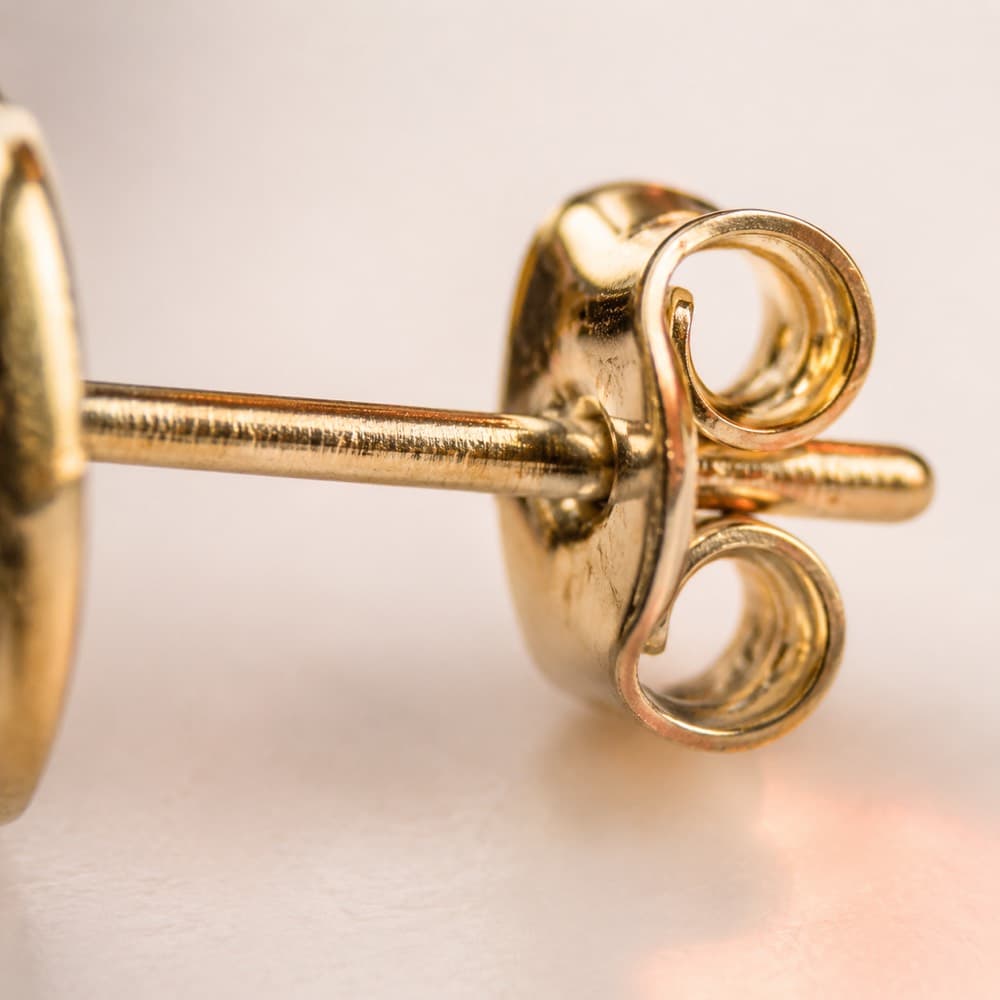 Post and fittingSealed
Solid 9ct gold throughout, on a 0.8 mm post, 0.5 g per piece.
£115.00inc. VAT
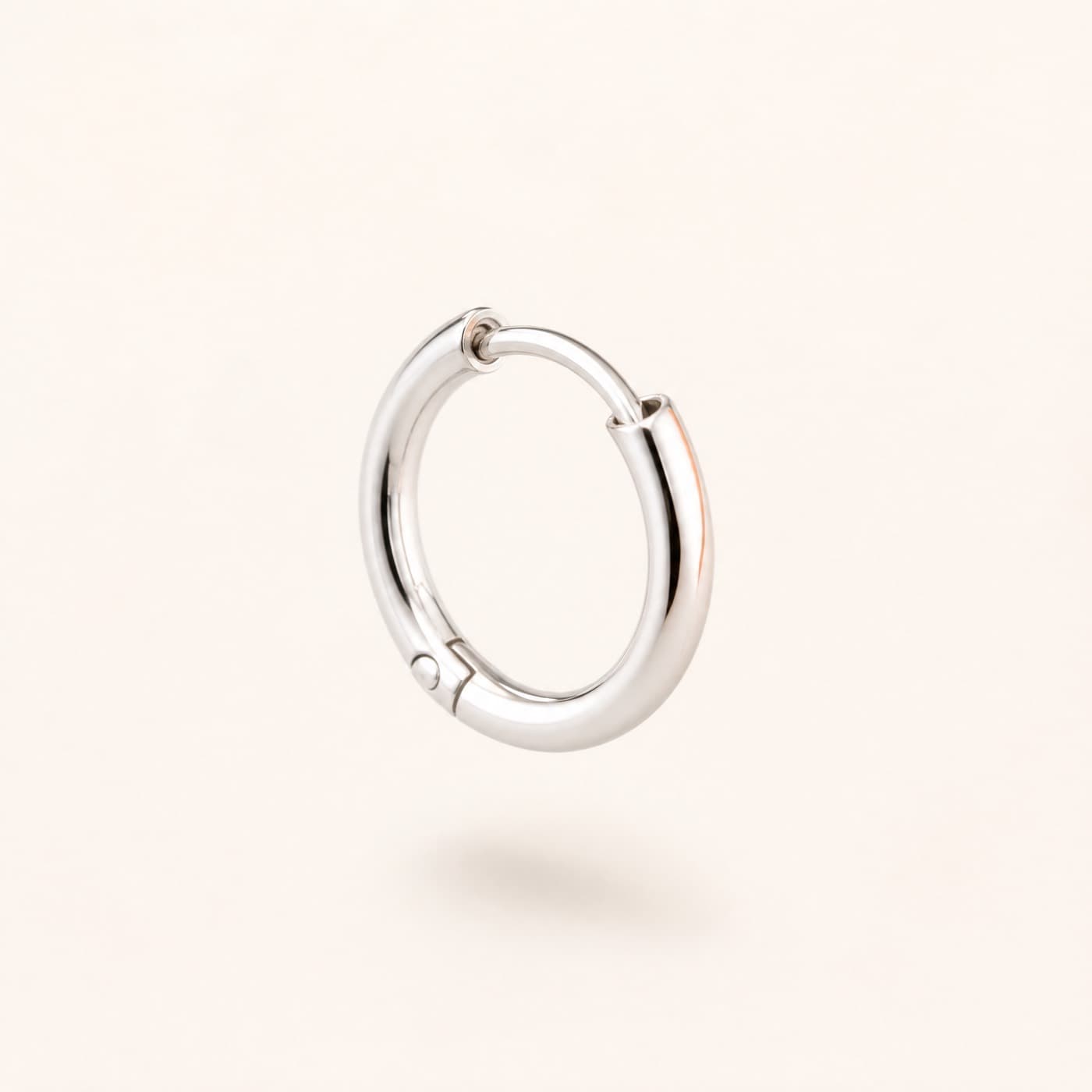
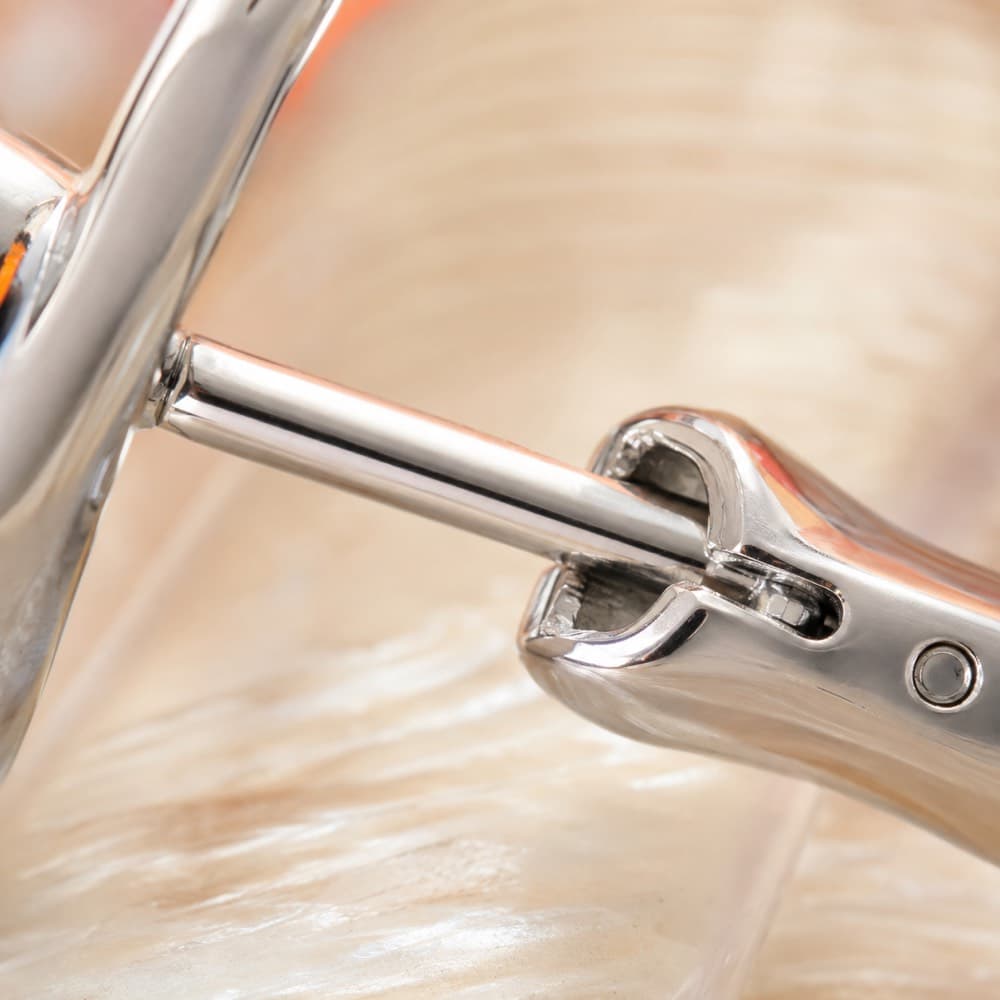 Post and fittingSealed
A 6 mm hoop on a fine 0.8 mm wire, 0.3 g per piece — our lightest hoop.
£35.00inc. VAT
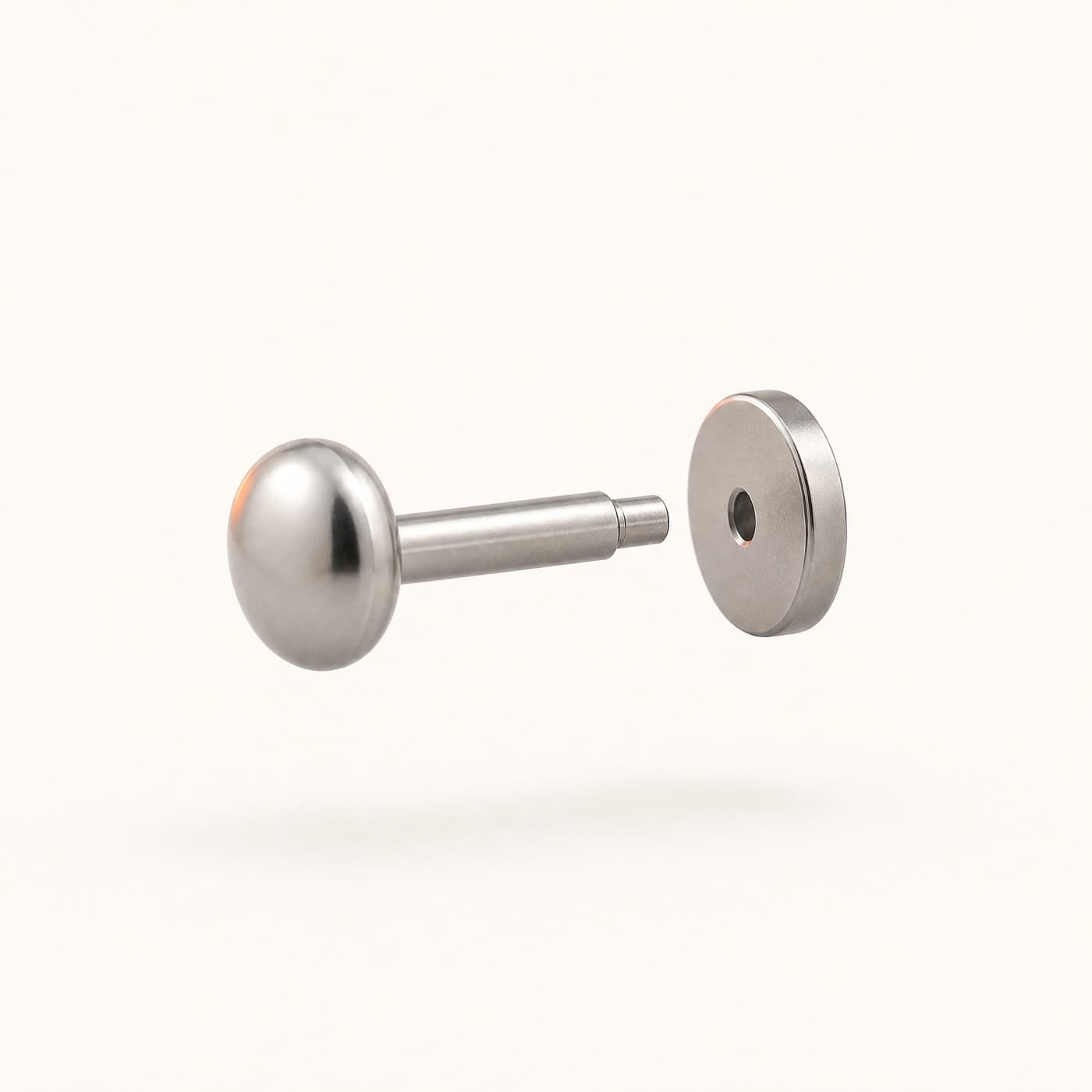
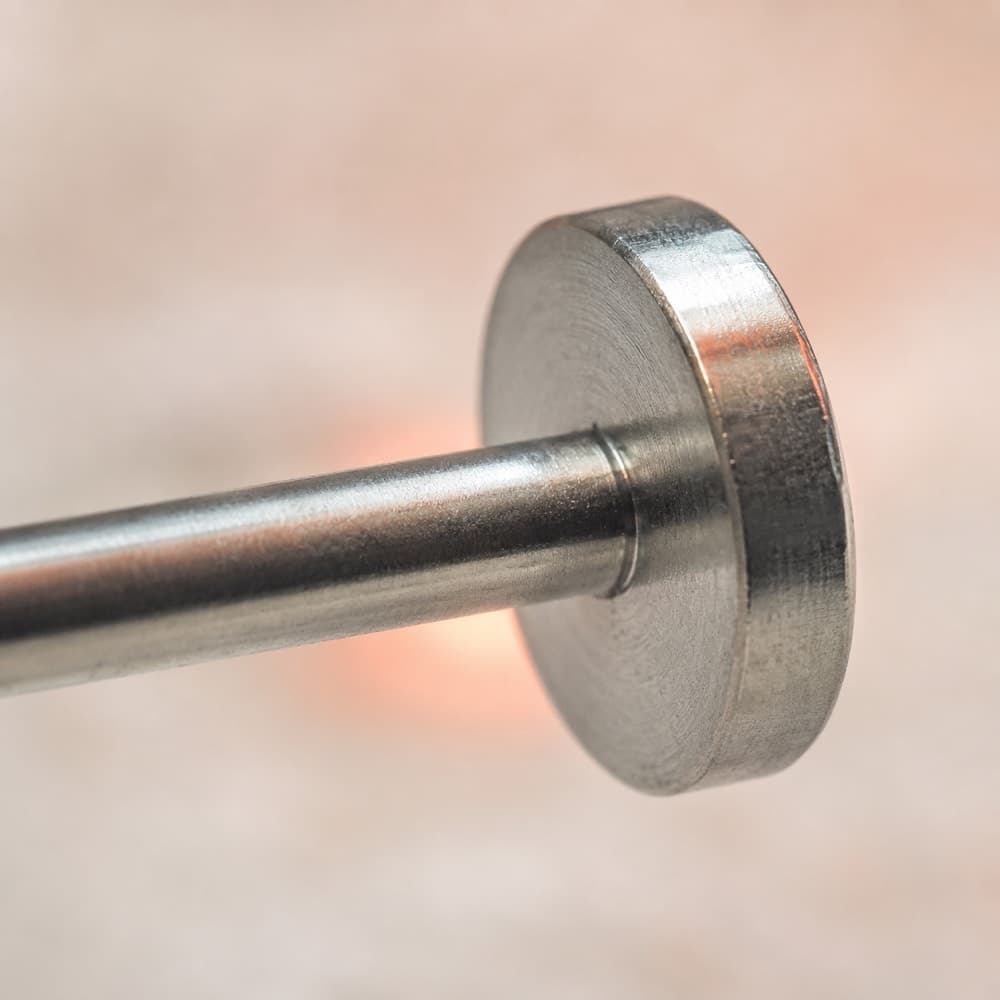 Post and fittingSealed
The cartilage flat-back in ASTM F-136 titanium, 0.9 mm post, 0.3 g per piece.
£85.00inc. VAT
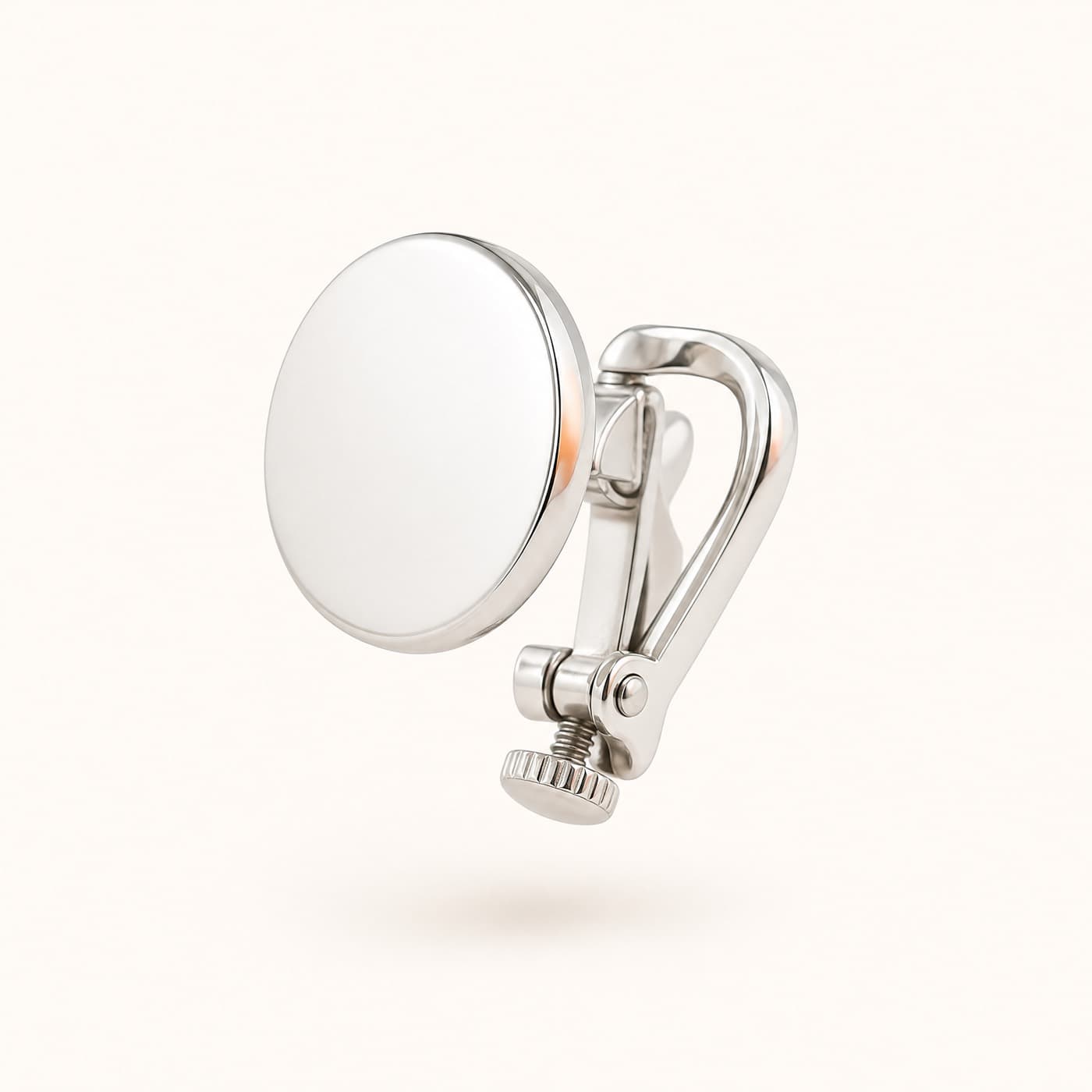
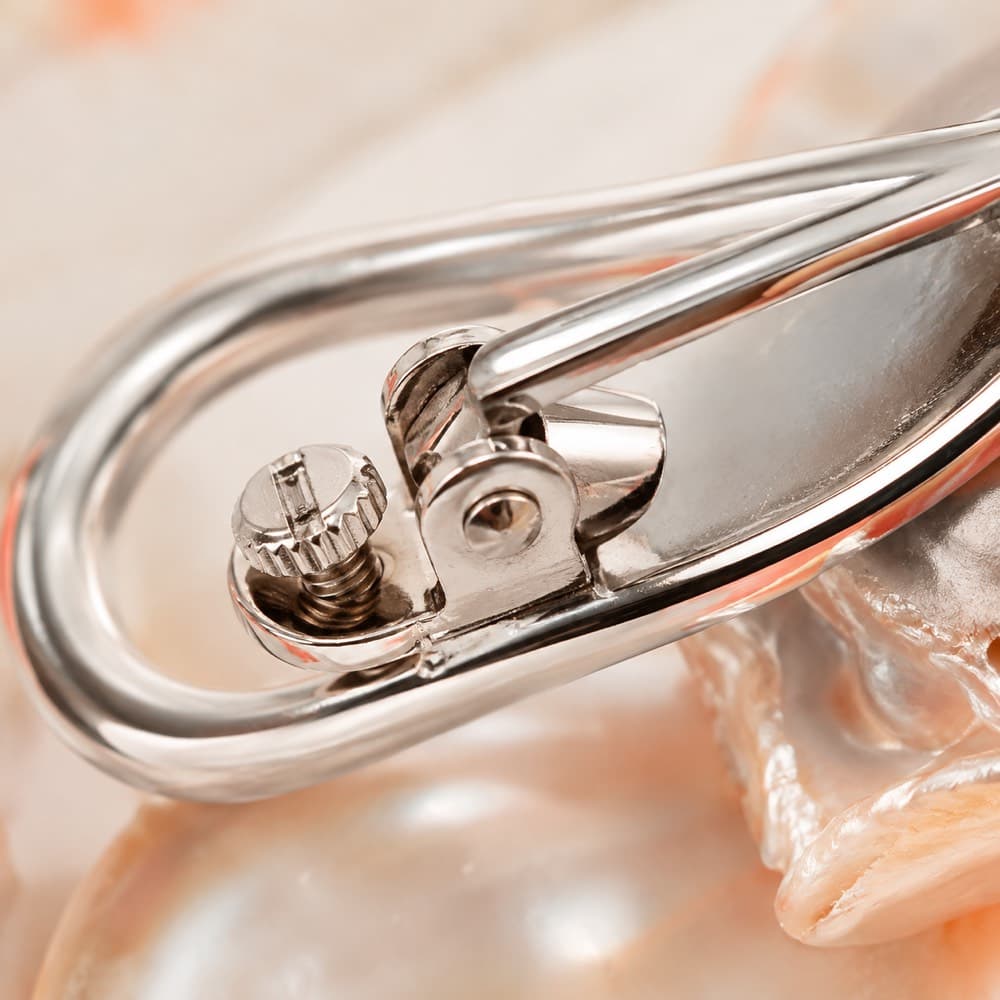 Post and fitting
A 6 mm disc on an adjustable sterling silver clip, no piercing needed, 1.4 g.
£45.00inc. VAT
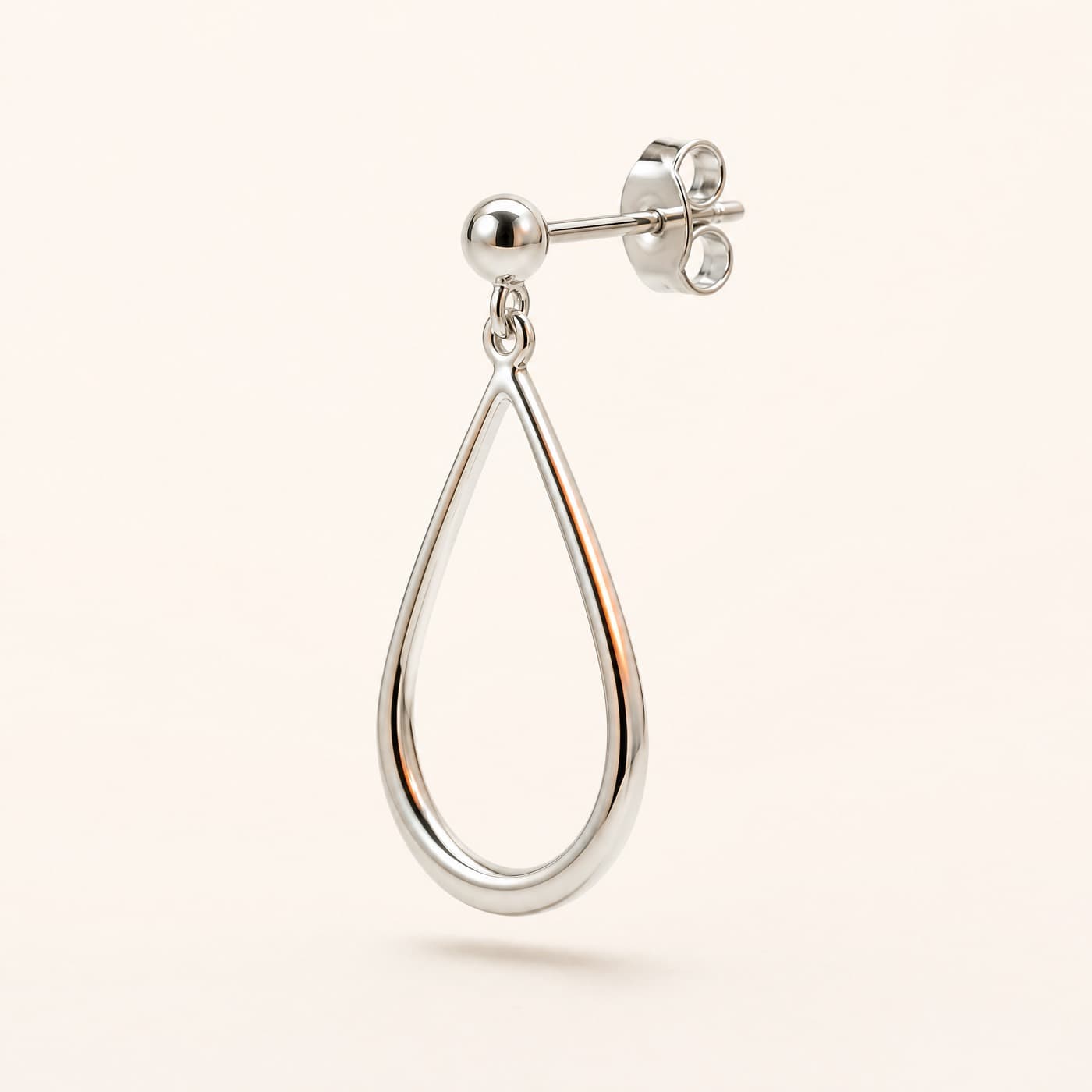
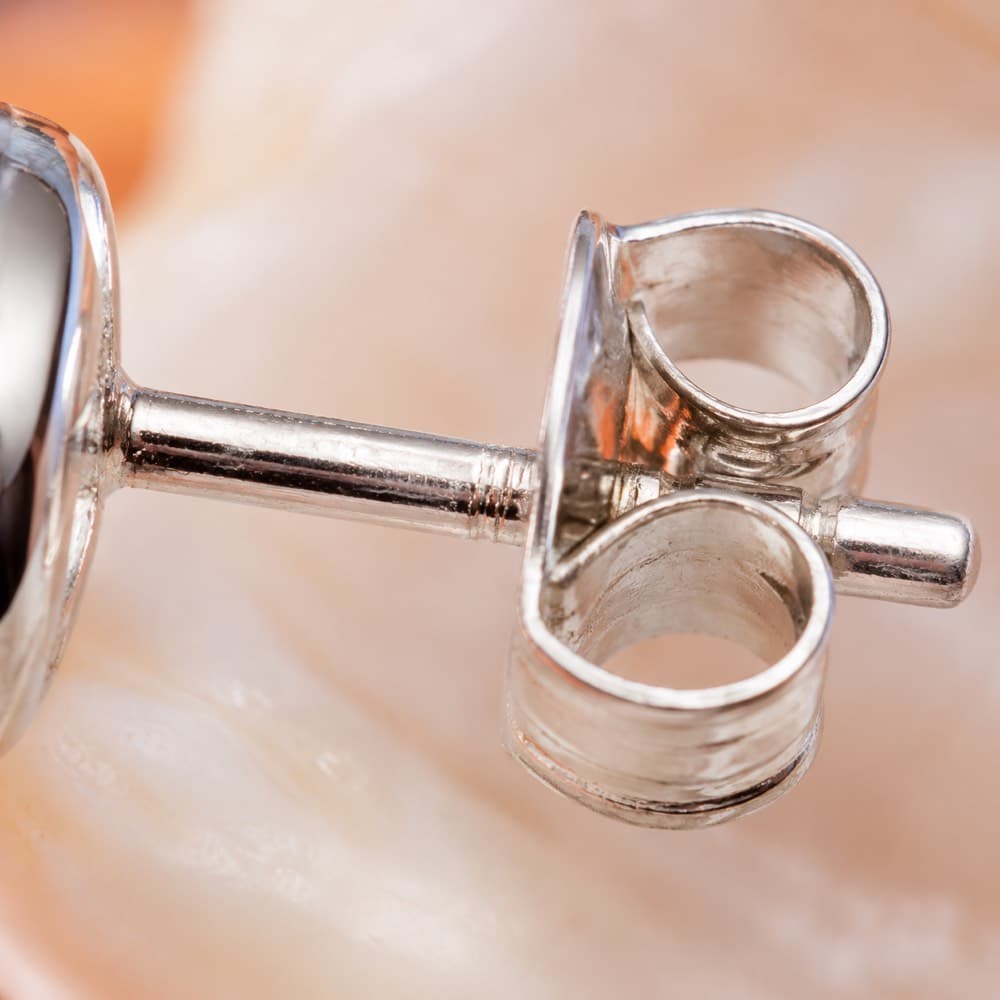 Post and fittingSealed
An open teardrop outline, 30 mm long, 2.4 g per piece.
£75.00inc. VAT
Sensitivity filter
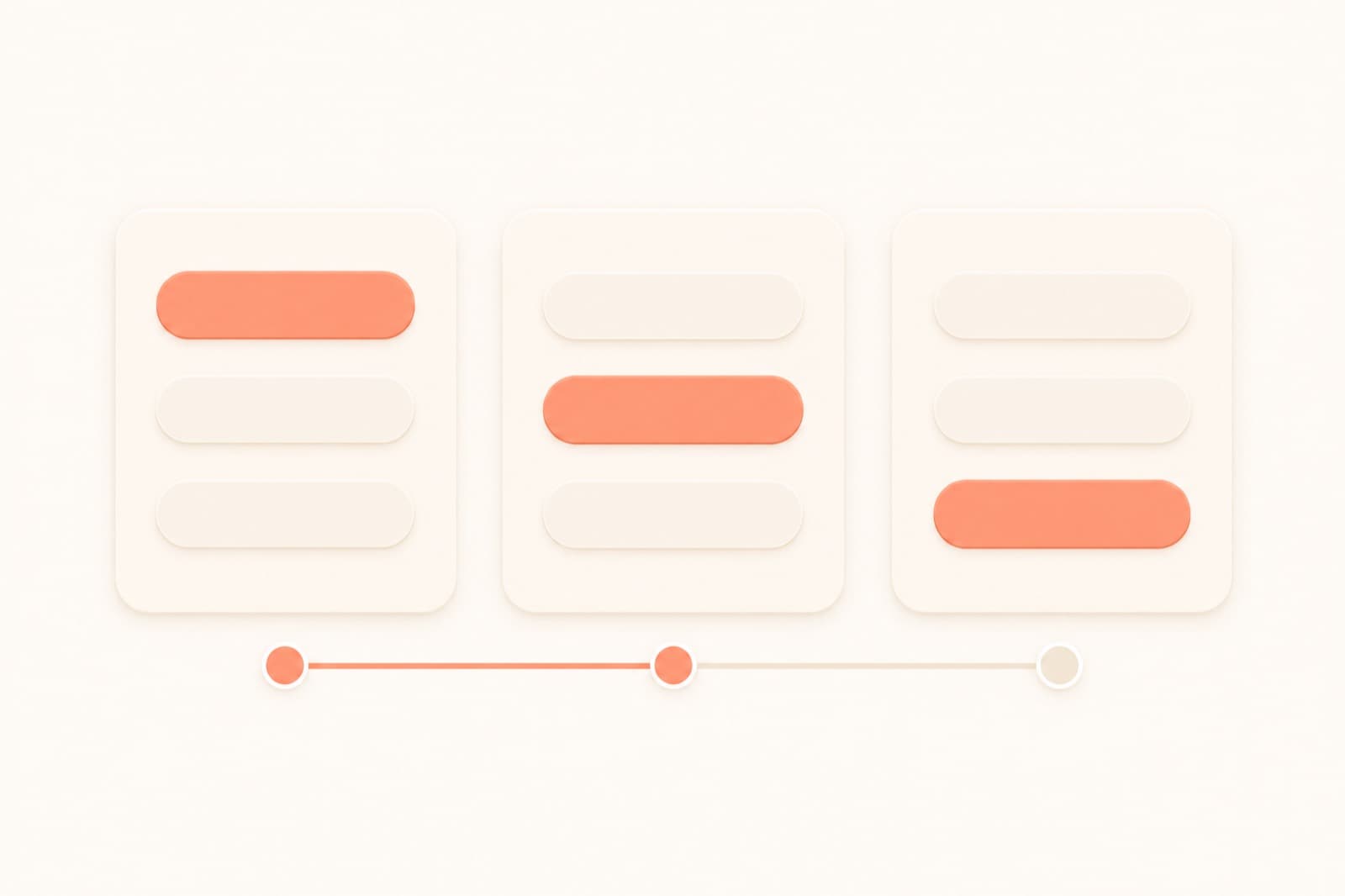
Three questions — whether your ears have reacted before, what post gauge you wear now, and which position you are buying for. The answer is a filtered list based on stated materials and dimensions. It is not a diagnosis and it does not pretend to be one.
Nickel and materials
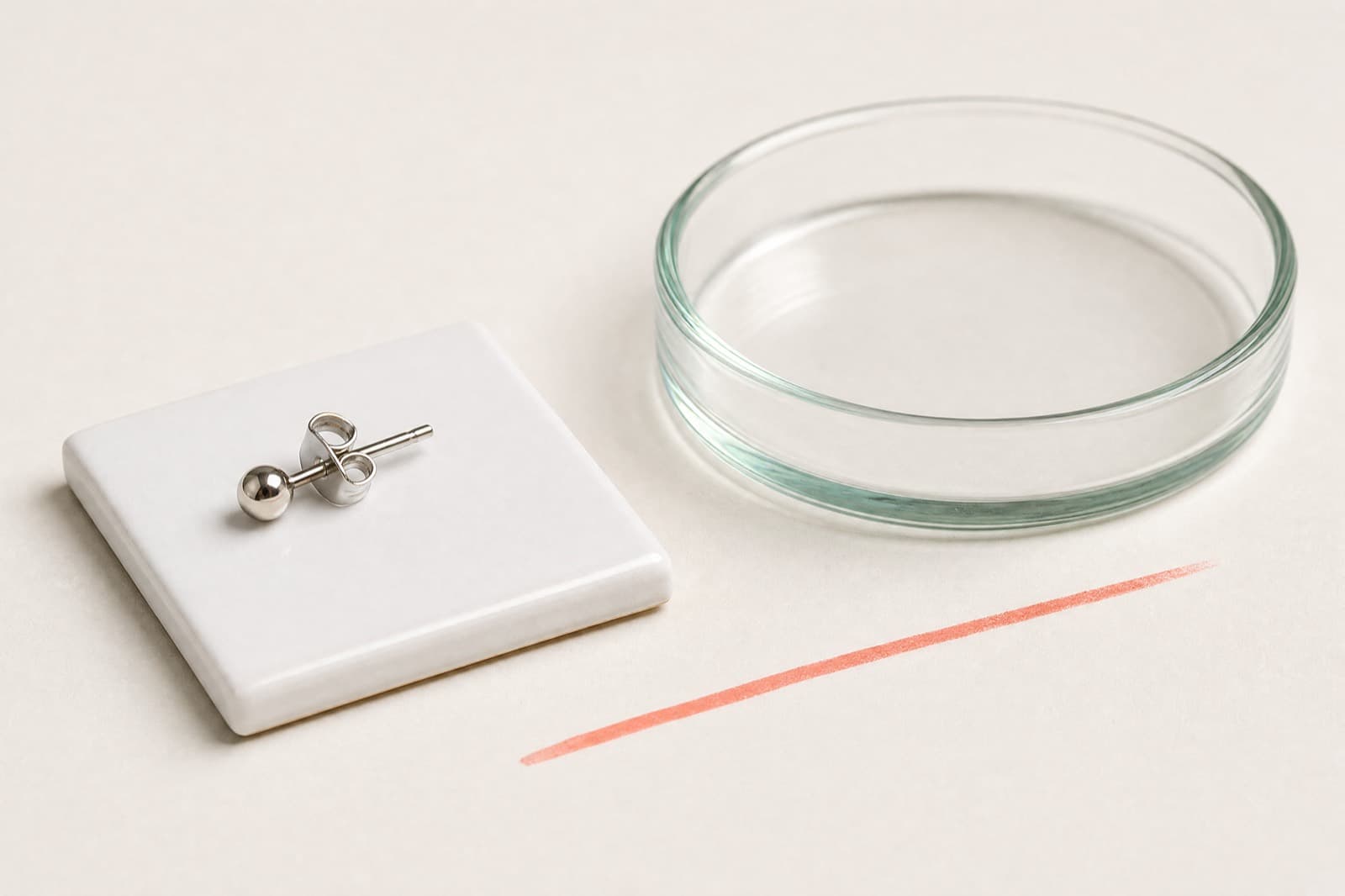
Nickel-safe — tested to UK REACH limits (BS EN 1811).
Meeting the nickel release limit is not a promise that nobody will react. Some people react to other metals or materials — cobalt, chromium, resins and platings among them. If your ears are sensitive, wear a new piece for a short period first and see how it settles.
Two limits, and which one applies. Anything inserted into a piercing is tested against 0.2 µg/cm²/week. Anything in prolonged contact with skin but not inserted — clip-ons, cuffs, butterfly clutches — is tested against 0.5. Each product page states which limit it was tested to and the standard used.
On “surgical steel”. "Surgical steel" is not a synonym for nickel-free. 316L stainless steel contains nickel. What matters under UK REACH is how much nickel the metal releases through the skin, not whether nickel is present in the alloy. We state the grade of every steel and the release limit it is tested against, and we do not use the phrase "surgical steel" as a shorthand for safety.
What we will not write. There is a word this category reaches for constantly that you will not find anywhere on this site. It reads like a specification and functions like a guarantee, and it is a guarantee nobody selling metal can honestly make. We publish the limit, the standard and the caveat instead, and let you decide. Which word, and why
Sealed, and what that means for returns
Earrings that go through a piercing are sealed for hygiene reasons. That seal is the line between returnable and not, so we make it visible three times before you pay — on the product page, in the basket, and as a separate tick at checkout.
Unopened
Full 14-day right to cancel, seal intact, including piercing pieces.
Opened piercing piece
Cannot be returned, for hygiene and health reasons.
Clip-ons and cuffs
Nothing goes through skin, so the hygiene exception does not apply. Normal 14 days.
Faulty, damaged or wrong items are always put right, sealed or not — that is your right under the Consumer Rights Act 2015 and nothing here reduces it.
Read the full returns policy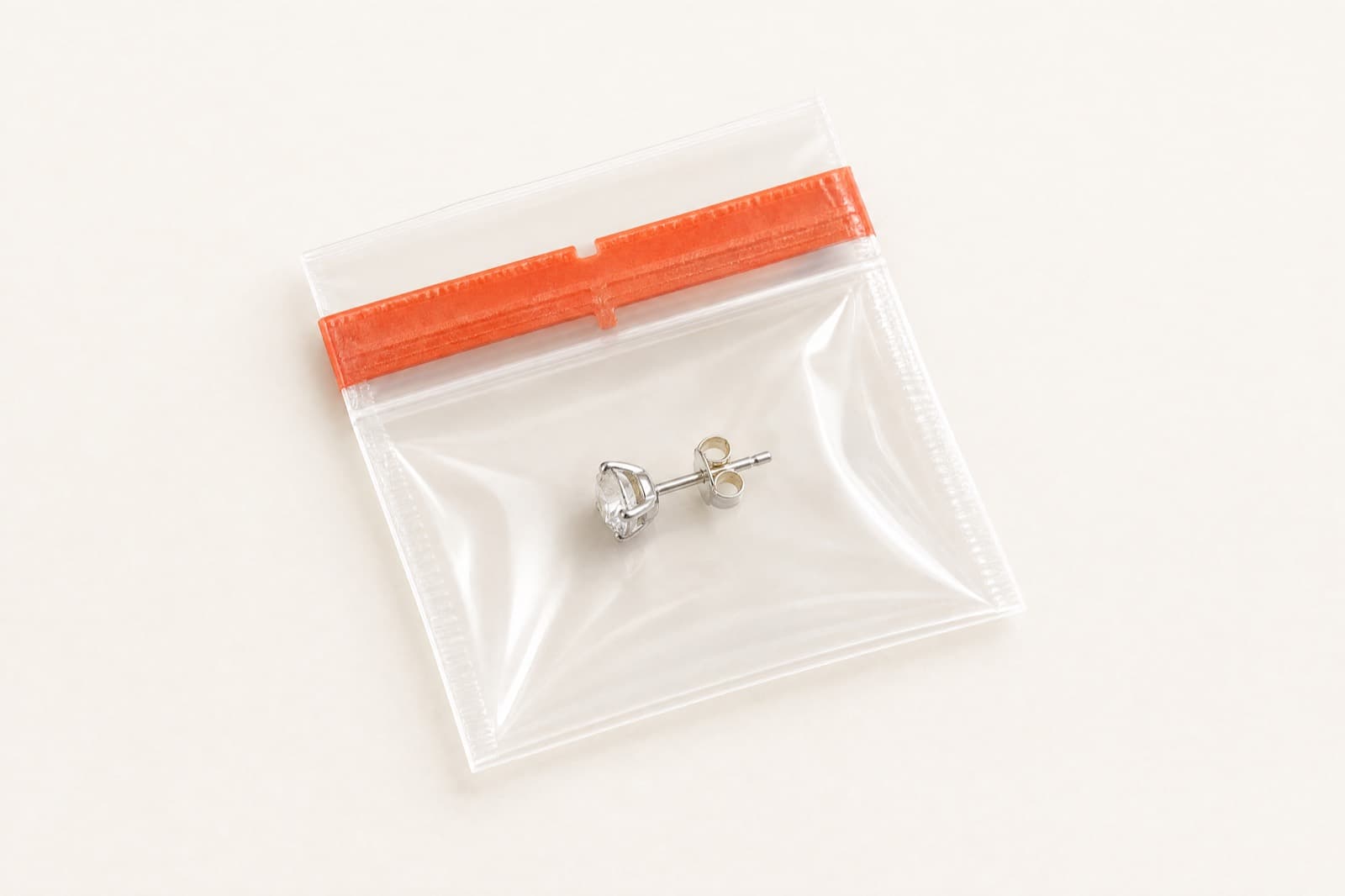
Free, and easy to leave
A short email when something new is made or when we publish a new material note. No membership, no subscription box, no monthly charge — we do not sell any of those. One click unsubscribes.