Nickel-safe — tested to UK REACH limits (BS EN 1811).
Meeting the nickel release limit is not a promise that nobody will react. Some people react to other metals or materials — cobalt, chromium, resins and platings among them. If your ears are sensitive, wear a new piece for a short period first and see how it settles.
The nickel release limits
Nickel is regulated in the UK under UK REACH, Annex XVII entry 27. The rule is not about whether an alloy contains nickel — almost all of them do, in some quantity. It is about how much nickel migrates out of the metal into skin over time. Two different limits apply depending on what the item does.
| What the item does | Limit | Applies to |
|---|---|---|
| Inserted into a pierced ear | ≤ 0.2 µg/cm²/week | Every stud, hoop, huggie, drop, threader and flat-back we sell |
| Prolonged contact with skin, not inserted | ≤ 0.5 µg/cm²/week | Clip-ons, ear cuffs, ear hooks, and butterfly and screw backs that sit behind the lobe |
Every metal product page on this site states which of these two limits the piece is tested against, and the test standard used. If a piece did not have that data recorded against it, it would not appear in the catalogue at all — that is enforced in code, not by a checklist.
Test standards
- BS EN 1811 — the reference method for measuring nickel release from items in direct and prolonged contact with skin, and from items inserted into pierced parts of the body.
- BS EN 12472 — the wear-and-corrosion simulation used before testing coated items, so that a coating that would wear through in normal use does not mask the metal underneath.
Supplier conformity documentation for each batch is held on file. If you want the documentation for a specific piece, ask us and we will send what we hold.
What a release limit is not. Meeting the nickel release limit is not a promise that nobody will react. Some people react to other metals or materials — cobalt, chromium, resins and platings among them. If your ears are sensitive, wear a new piece for a short period first and see how it settles. A limit is a ceiling on one specific mechanism of irritation from one specific metal. It is genuinely useful — it is why cheap plated jewellery and well-made jewellery behave differently — but it is not a promise about your skin, and anyone who tells you otherwise is selling you something.
On the phrase “surgical steel”
"Surgical steel" is not a synonym for nickel-free. 316L stainless steel contains nickel. What matters under UK REACH is how much nickel the metal releases through the skin, not whether nickel is present in the alloy. We state the grade of every steel and the release limit it is tested against, and we do not use the phrase "surgical steel" as a shorthand for safety.
316L stainless steel typically contains somewhere between 10% and 14% nickel by weight. It is a good material and it is widely used precisely because it is stable and releases very little of that nickel — but “contains no nickel” and “releases very little nickel” are different statements, and only the second one is true. Where we use steel we state the grade. We never write “surgical steel” on its own as though it were a safety rating.
The materials we use
Titanium, ASTM F-136
ASTM F-136 is the specification for Ti-6Al-4V ELI — an extra-low interstitial titanium alloy originally specified for surgical implants. We state the grade because “titanium” on its own covers a wide range of alloys of very different quality. It is roughly half the weight of sterling silver for the same shape, which is why our titanium pieces are consistently the lightest in the range.
925 sterling silver
92.5% silver, with the remaining 7.5% usually copper. Pure silver is too soft to hold a post shape, which is why sterling exists. It tarnishes — that is silver reacting with sulphur compounds in the air, it is normal, and it polishes off. We do not claim otherwise, and you will not find the phrase “never tarnishes” anywhere on this site.
9ct gold, 375
37.5% gold by weight, alloyed with other metals for hardness. Solid throughout — the post is the same alloy as the front. We do not sell gold plating over base metal as though it were gold.
Silicone
Used for comfort pads and replacement backs. No metal content, so the nickel limits do not apply to those products, and we say so on the page rather than leaving a blank field.
Plating, and the words for it
We currently sell no plated pieces — every metal item in the catalogue is solid throughout. If that changes, these are the terms we will use and what each one will mean:
| Term | What it means |
|---|---|
| Gold-plated | A thin layer of gold deposited over a base metal. Wears through with use, at which point the base metal is what touches you. |
| Gold-filled | A substantially thicker bonded layer of gold, mechanically applied. More durable than plating. |
| Vermeil | Gold over sterling silver, with a gold layer of at least 2.5 microns. The base must be sterling silver for the term to apply. |
| Gold-tone | The colour of gold and none of the metal. Not a precious metal product. |
Lead and cadmium
Jewellery placed on the UK market is also restricted for lead (below 0.05% by weight) and cadmium (below 0.01% by weight) in the metal parts. Our pieces are sourced to comply with both.
What we will not sell
- Ivory, in any form or age, under the Ivory Act 2018.
- CITES-listed materials, including coral and tortoiseshell.
- Earrings intended for children under 12, and we do not sell piercing tools or offer a piercing service.
Reading the numbers on a product page
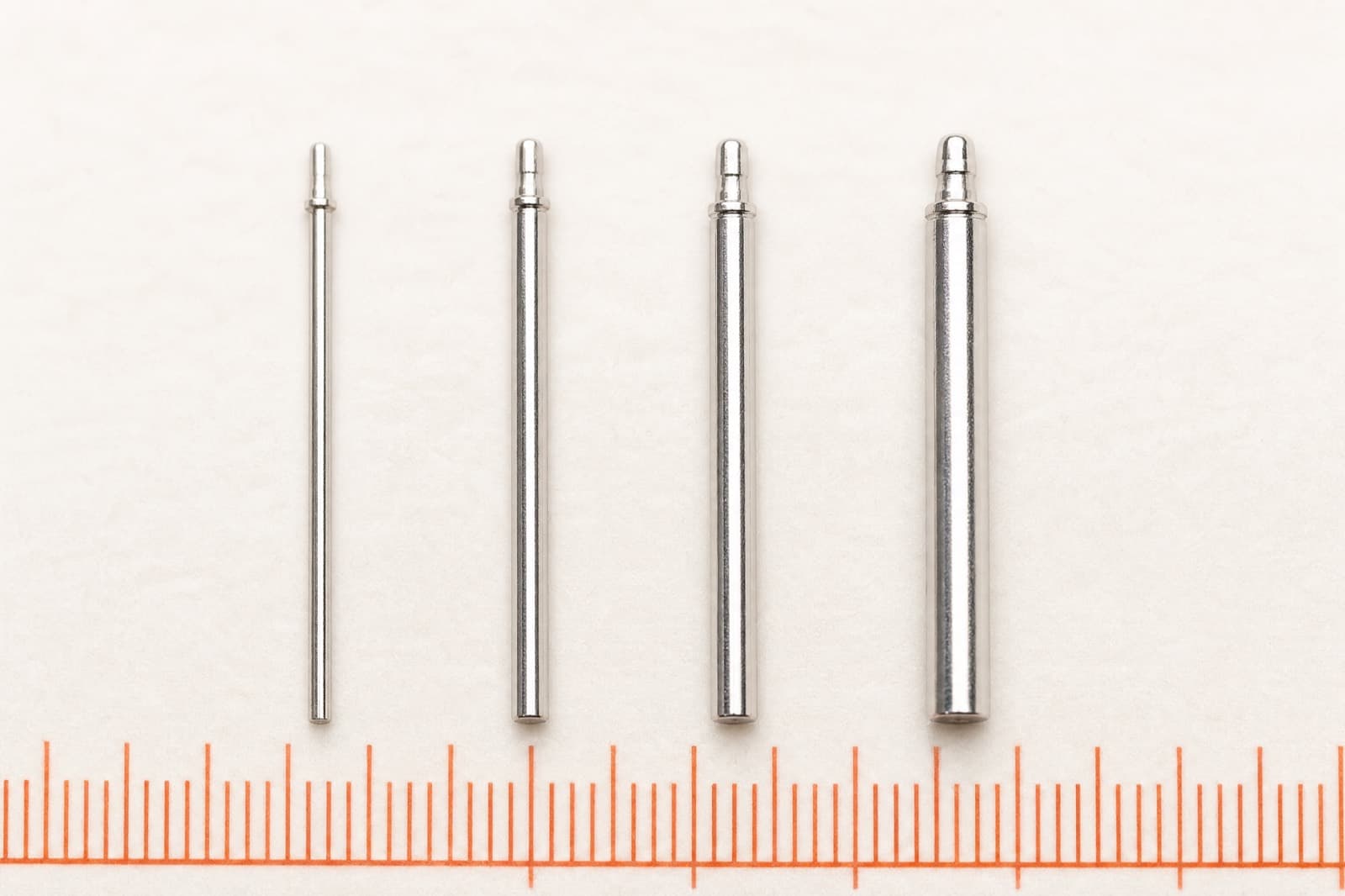
Every product page carries the same six fields at the top: post material, nickel release limit and test standard, post diameter, post length, back type, and weight per single piece. See the ear map for what those fields mean at each position, or use the sensitivity filter to narrow the catalogue by them.
Have a specific materials question? Use the material enquiry form and we will answer it in terms of what we stock and what it is made of. We cannot answer questions about what you are allergic to — those belong with a healthcare professional.